Table Of Content

Any more than this could mean you’re shedding more than you should, which could contribute to overall thinning hair. Medications and other treatments help manage your hair loss, but they won’t cure the disease. Alopecia areata totalis and alopecia areata universalis are more severe and less likely to respond to treatment. Some small, limited studies have found that certain supplements and shampoos could be helpful, dermatologists say. However, your best bet if you’re suffering from hair loss is to see a board-certified dermatologist who can determine what’s causing your alopecia and then recommend a treatment plan.
Care at Mayo Clinic
Telogen effluvium is a type of hair loss that involves rapid shedding of hair over a short period. It typically happens a few months after your body goes through something physically or emotionally stressful. Hair loss due to telogen effluvium is usually temporary, and your hair often grows back without treatment once you no longer have stress.
ANDROGENETIC ALOPECIA
Hair loss is not usually anything to be worried about, but occasionally it can be a sign of a medical condition. Stanford Health Care provides comprehensive services to refer and track patients, as well as the latest information and news for physicians and office staff. For help with all referral needs and questions, visit Referral Information. A systematic review of 30 studies suggests a discussion on nutritional supplementation should be considered between patient and physician. Hair shaft defects can be inherited and congenital, or acquired due to disease or injury (eg, excessive brushing, hair pulling [trichotillomania], hairdryer heat, relaxing chemicals, bleach).
certain medications
The presence of erythema, scaling, or inflammation; altered or uneven hair distribution; or changes in shaft caliber, length, shape, or fragility may suggest other diagnoses. According to the American Academy of Dermatology, it’s completely normal to shed anywhere between 50 to 100 strands of hair per day. However, if you’ve noticed more strands falling out of your head than normal, you may be experiencing alopecia, the medical term for hair loss.
Hair Loss
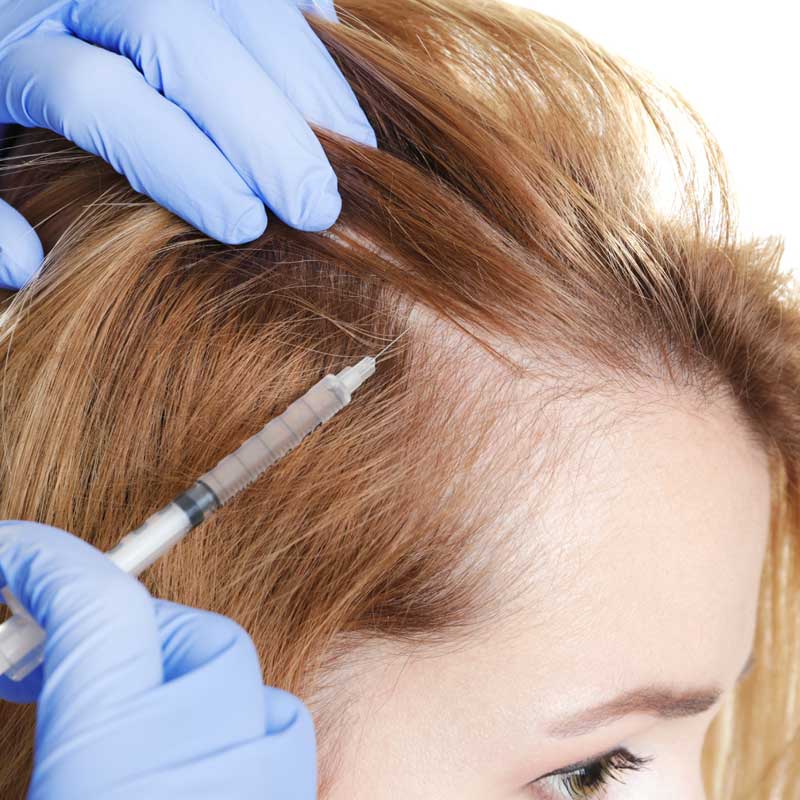
Alopecia areata totalis and alopecia areata universalis are more severe, and your body is less likely to respond to treatment options. If you have healthy hair on the back or side of your head, a doctor can surgically remove hair strands from those areas and graft them into your scalp in a bare area. It’s another expensive treatment that isn’t generally covered by insurance, but it tends to be a long-lasting solution. You can either purchase over-the-counter laser devices to use at home or receive the treatments from a provider. A variety of treatments have been developed to help regrow hair and thicken existing hair on patients with alopecia, dermatologists say.
At-home laser therapy
If your hair loss is caused by an underlying disease, treatment for that disease will be necessary. If a certain medication is causing the hair loss, your doctor may advise you to stop using it for a few months. This works well for people with inherited baldness since they typically lose hair on the top of the head. Because some hair loss can be progressive, you may need multiple procedures over time. Typically, the most common types of hair loss are treated with topical or oral medications, which will likely be the first course of treatment.
Hair-Loss TikTok Offers Community, and Dubious Recommendations - The New York Times
Hair-Loss TikTok Offers Community, and Dubious Recommendations.
Posted: Wed, 13 Dec 2023 08:00:00 GMT [source]
DermNet does not provide an online consultation service.If you have any concerns with your skin or its treatment, see a dermatologist for advice. A hair shaft grows within a follicle at a rate of about 1 cm per month. It is due to cell division within the hair bulb at the base of the follicle. The cells produce the three layers of the hair shaft (medulla, cortex, cuticle), which are mainly made of the protein keratin (which is also the main structure of skin and nails).
Concussion in children: What to know and do

As part of your hair’s growth cycle, new strands grow and take the place of the ones you shed. Hair is made of a protein called keratin that is produced in hair follicles in the outer layer of skin. As follicles produce new hair cells, old cells are being pushed out through the surface of the skin at the rate of about 6 inches a year.
If your dermatologist suspects that the cause of your hair loss could be a disease, vitamin deficiency, hormone imbalance, or infection, you may need a blood test or scalp biopsy. People with certain diseases, such as psoriasis, and those with allergic conditions such as hay fever are more likely to get alopecia areata. If you have a close family member with the disease, you may have a higher risk of getting it, but for many people, there is no family history. If your hair is thinning due to other reasons, you may be able to try topical products, such as shampoos and even prescription medications.
But most treatments are not available on the NHS, so you'll have to pay for them. Sometimes there appears to be no recognisable cause for telogen effluvium, and shedding can continue for years (chronic telogen effluvium). Scalp hair continues to grow but has a shorter natural length than normal. If caused by a drug or toxin, hair growth can return to normal within 3–6 months of its withdrawal.
Nonscarring alopecias can be readily diagnosed and treated in the family physician's office. Androgenetic alopecia can be diagnosed clinically and treated with minoxidil. Alopecia areata is diagnosed by typical patches of hair loss and is self-limited. Tinea capitis causes patches of alopecia that may be erythematous and scaly and must be treated systemically. Telogen effluvium is a nonscarring, noninflammatory alopecia of relatively sudden onset caused by physiologic or emotional stress. Once the precipitating cause is removed, the hair typically will regrow.
Female-pattern baldness typically starts with scalp hairs becoming progressively less dense. Many women first experience hair thinning and hair loss where they part their hair and on the top-central portion of the head. Begin by determining if hair loss is focal or diffuse; if focal, look for scarring.
You can also place less stress on your hair by limiting the use of heated styling tools as well as tight hairstyles. Laser therapy is typically used by dermatologists and other skin specialists. The FDA has cleared the way for some products to be used at home. When you wash your hair, gently apply pressure with your fingertips around your scalp to encourage blood flow.

As with most conditions, the physician should begin the evaluation with a detailed history and physical examination. It is helpful to determine whether the hair loss is nonscarring (also called noncicatricial), which is reversible, or scarring (also called cicatricial), which is permanent. Scarring alopecia is rare and has various etiologies, including autoimmune diseases such as discoid lupus erythematosus. If the follicular orifices are absent, the alopecia is probably scarring; these patients should be referred to a dermatologist.



No comments:
Post a Comment